Engagement & Motivation: uneven but telling
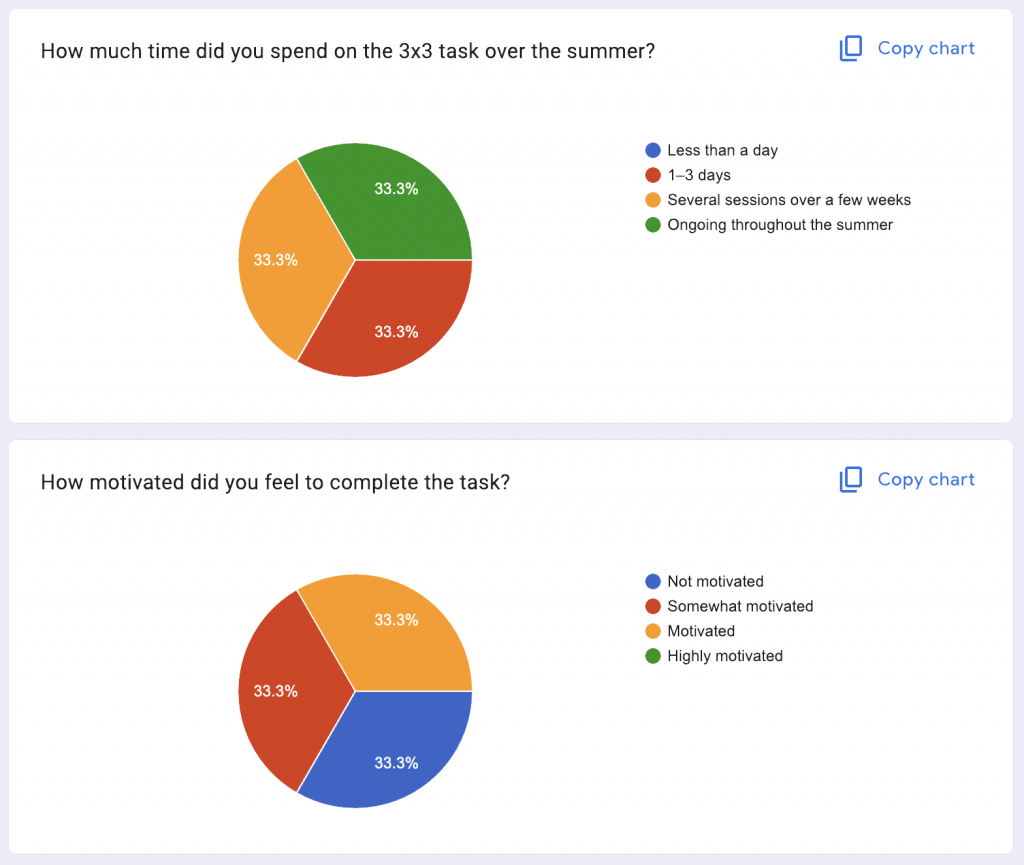
Engagement with the project varied widely across year two students, and motivation was closely tied to clarity of purpose/reason for doing rather than workload.
Some students engaged ongoingly across the summer, while others treated it as a short, discrete task (1–3 days). Lower motivation often stemmed from uncertainty about what the task was “for”: Students who didn’t see how the 3×3 would connect to Year 2 felt less compelled to invest.
Students who were motivated tended to cite: The curated nature of the reading/film lists, and the sense that the task was manageable rather than overwhelming.
I think this suggests the issue isn’t resistance to research, but a need for stronger framing and forward-linking. Students are pragmatic and want to understand payoff
Research Understanding: from “task” to “process
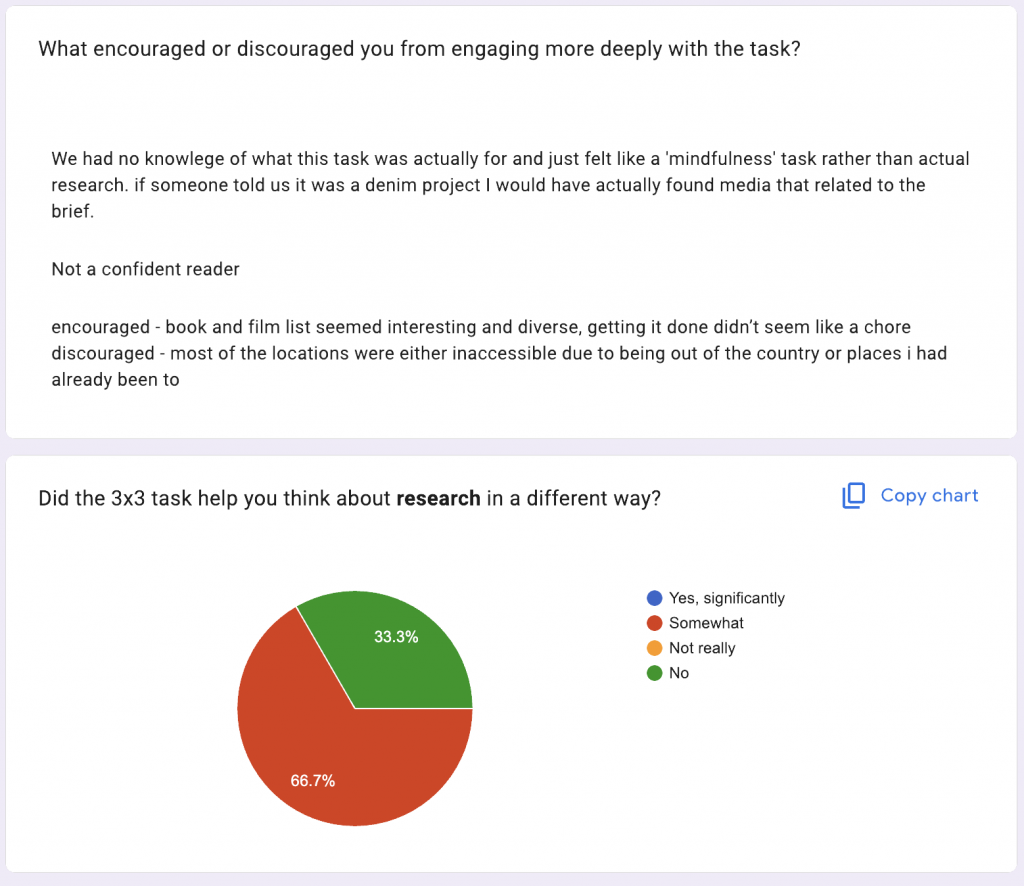
For a portion of students, the project shifted research from something instrumental to something exploratory, but this shift was not universal. Some students still interpreted the task very literally: “The task was to read a book and watch a film” while Others articulated a broader change, seeing research as non-linear and Understanding references as something to return to, not just extract from. Some students recognised that research was a way of building a personal perspective, not just visual content
I think this split suggests a difference in research confidence, especially around reading. Students who self-identified as “not confident readers” struggled to access the conceptual intention of the project.
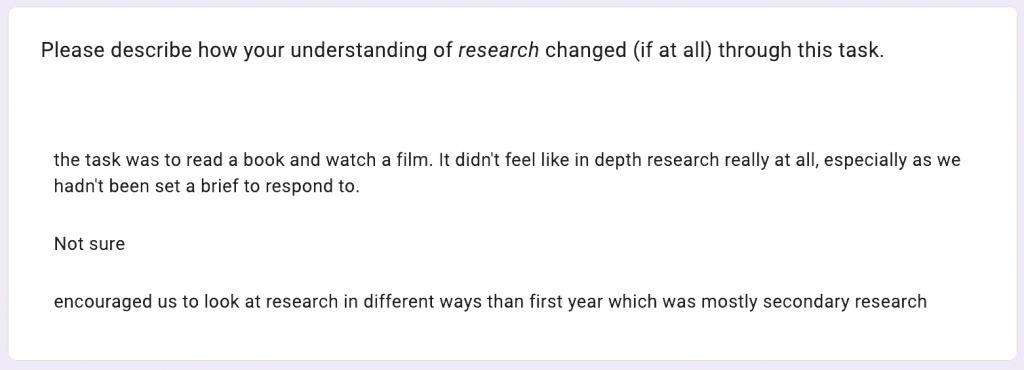
The task works probably best when paired with explicit teaching on how to read/watch/visit “as a designer” otherwise, some students default to compliance rather than inquiry.
Personal Connection & Identity: a real strength of the format
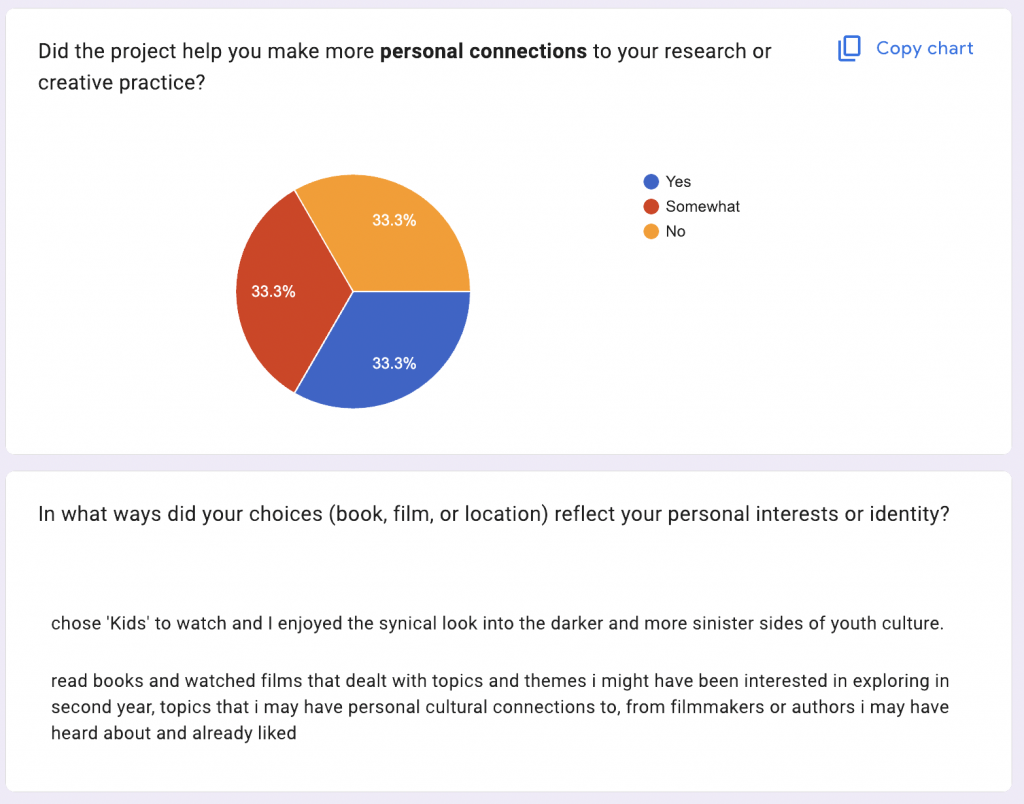
Where engagement occurred, the 3×3 format was effective at encouraging personal and identity-led research. Students frequently chose to engage with films/books that aligned with Cynicism, realism, subculture and Personal politics or lived experience. I feel the students felt permitted to engage with references that weren’t “fashion” but still felt relevant. Even students who were lukewarm on the task still acknowledged moments of personal resonance (archives, locations, specific films)
This strongly validates the open-ended, choice-driven structure of the project. It aligns well with menswear students’ desire to ground work in authentic worldview, not trend-led research.
Exposure to New References: subtle, not spectacular — but hopefully valuable
The project didn’t always produce dramatic “aha” moments, i dont think, but it consistently expanded students’ reference fields incrementally.
Responses clustered around: “A bit”, “Somewhat” and “Yes, definitely”. Some unexpected discoveries were modest but meaningful, which included: Archives, New ways of looking at familiar references and films they wouldn’t normally choose.
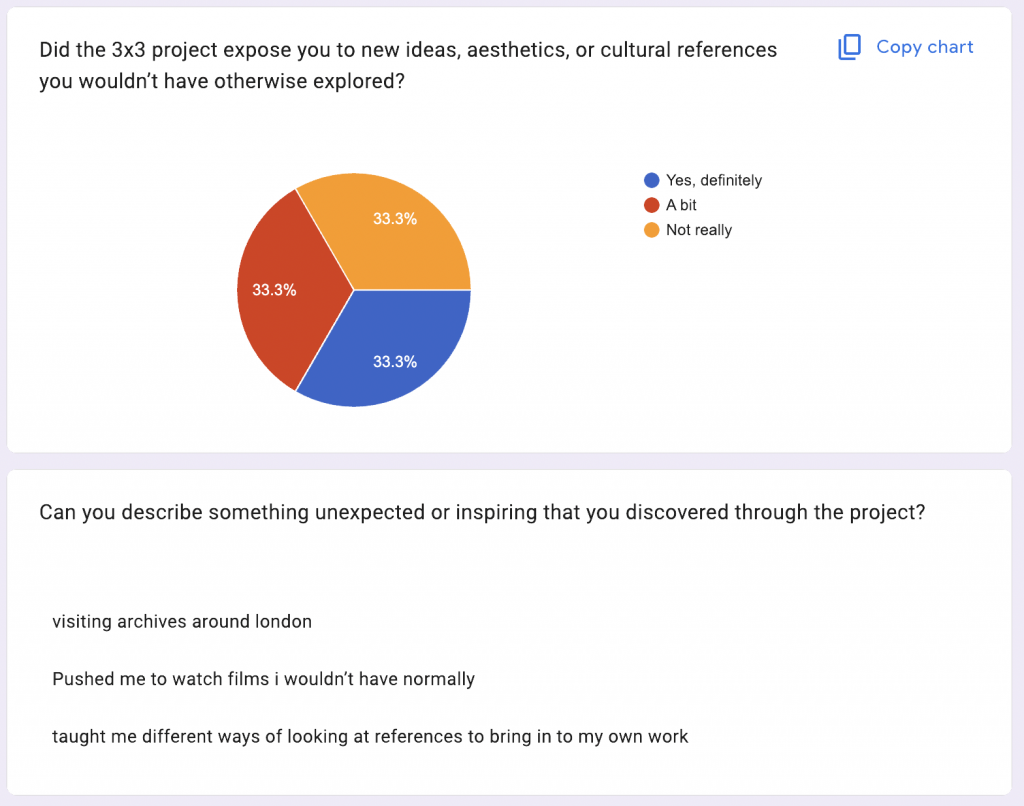
This is actually a strength, not a weakness I believe. It suggests the project functions as a slow-burn research primer, not a one-off inspirational hit, which is more sustainable for Year 2.
Translation into Studio Practice: potential not fully realised (yet)
Students believe the project could influence their work more than it currently does, and some explicitly stated that the work would have appeared more if there had been clearer integration into early Year 2 briefs. Some others had already used films as reference points, but now see reading as conceptual grounding rather than visual sourcing
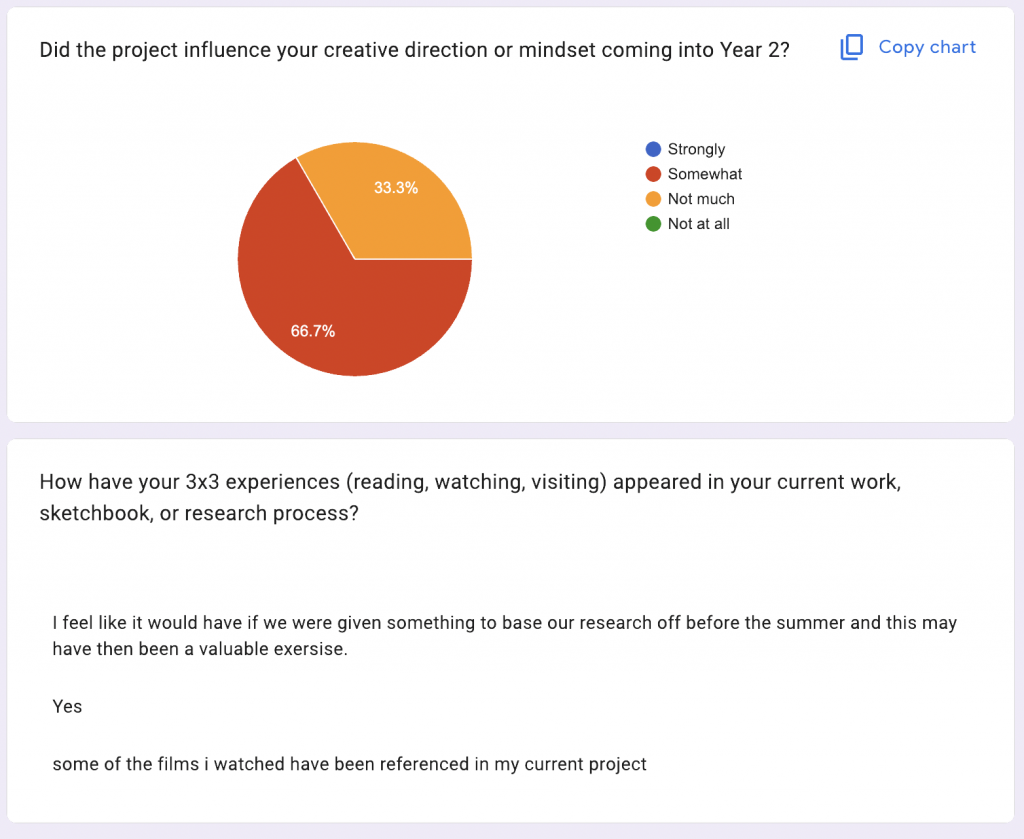
This is a strong argument for making the 3×3 a live research bank that is explicitly returned to in Term 1, and perhaps asking students to reactivate one element (book/film/location) in a studio context.
Barriers & Access Issues: practical, not ideological
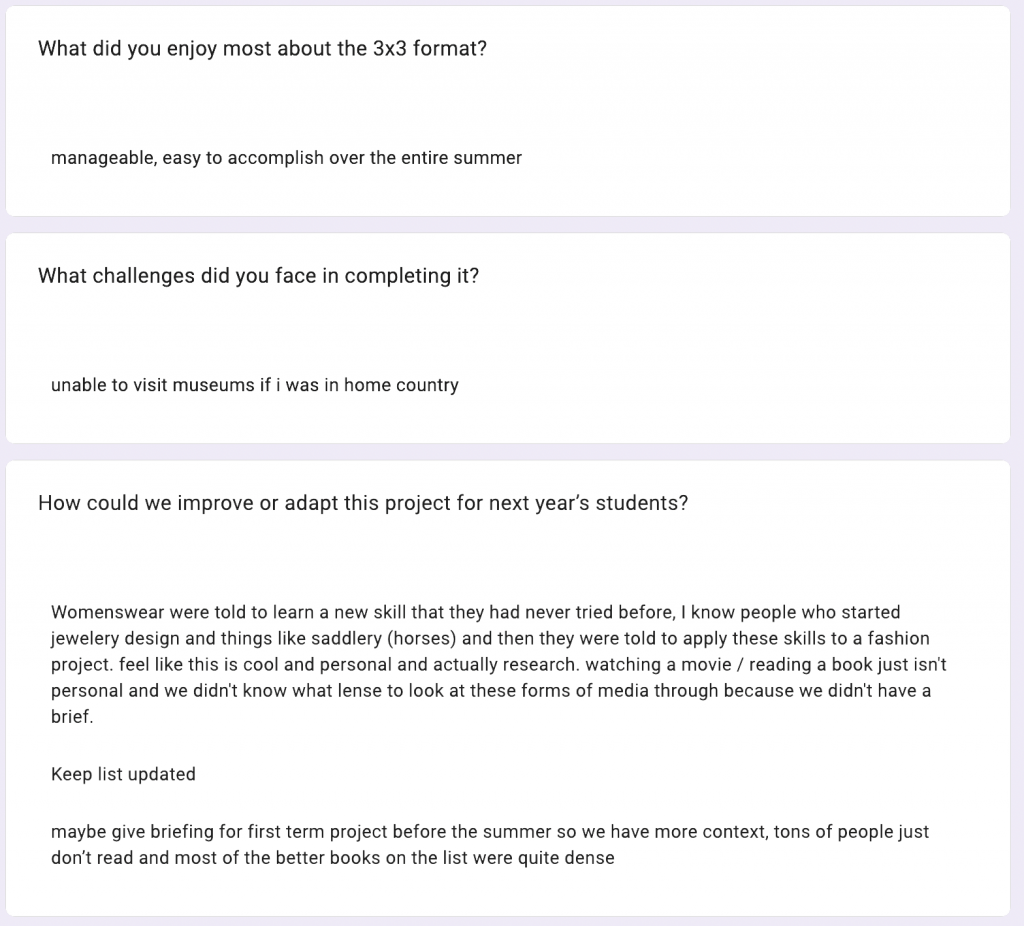
The challenges were mostly logistical rather than conceptual. Location-based research was harder for International students and students not based in London over the summer.
Reading confidence also emerged as a quiet but important blocker for some participants. This suggests future iterations could benefit from emphasising equivalence, not hierarchy (a film or digital archive can be as valid as a physical visit) and having optional scaffolding for reading-heavy choices.
Overall Impact & Recommendations
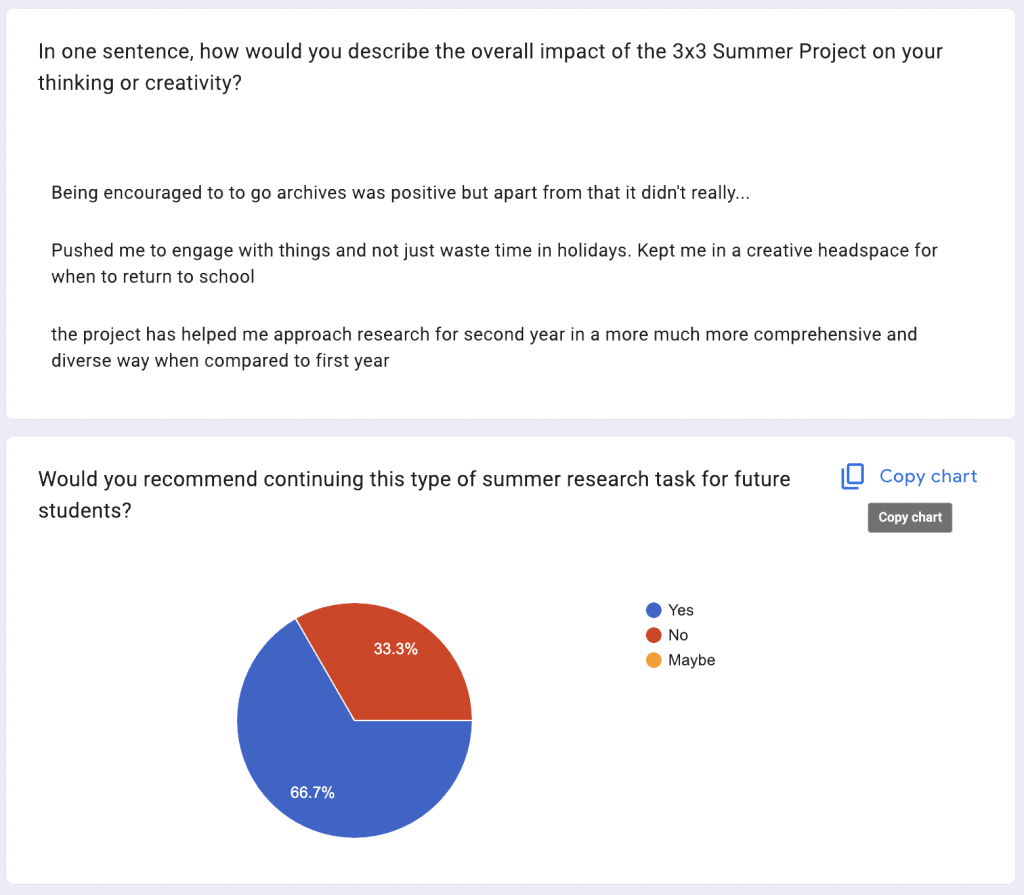
Despite mixed engagement, the majority of students support continuing the project. Students who recommended against it tended to cite a lack of clarity and drew comparisons with other pathways (e.g. womenswear being set a more “active” task)
Those in favour described some positives as: Expanded thinking, A gentle re-entry into academic research and a positive push to engage beyond passive scrolling.
This positions the 3×3 project as a valuable but under-signposted research tool, rather than a flawed concept.
Leave a Reply